








CONSTITUTION OF THE ANCIENT SOCIETY

 THE CONSTITUTION OF ANCIENT
Africans’ Network for Conscious Innovation, Empowerment & Native Technology
PREAMBLE
We, Africans and people of African descent, conscious of our shared history, ancestral intelligence, and collective future, do hereby establish ANCIENT as a Pan-African network, institution, and ecosystem dedicated to reclaiming African agency in technology, capital, knowledge, and civilization-building.
Guided by memory, governed by consciousness, and driven by innovation, we adopt this Constitution as the supreme framework through which ANCIENT shall operate, grow, and endure across generations.
ARTICLE I – NAME, IDENTITY & NATURE
1.1 Name
The name of the organization shall be:
ANCIENT
1.2 Full Meaning
Africans’ Network for Conscious Innovation, Empowerment & Native Technology
1.3 Nature
ANCIENT is a Pan-African, future-driven network that may function concurrently as:
A movement
- A foundation or institution
- A technology ecosystem
- An economic and investment platform
- A hybrid or decentralized autonomous organization (DAO), where legally permissible
1.4 Core Identity Statement
ANCIENT unites Africans and people of African descent to consciously design, own, and govern the technologies, systems, and economies of the future—rooted in African values and ancestral intelligence.
ARTICLE II – PHILOSOPHICAL FOUNDATION (THE ANCIENT ETHOS)
ANCIENT is founded upon three inseparable pillars:
2.1 Conscious Innovation
Innovation must serve life, dignity, and planetary balance.
ANCIENT therefore promotes:
- Ethical technology development
- Purpose-driven science and engineering
- Innovation aligned with human, communal, and ecological well-being
Innovation without consciousness is rejected.
2.2 Empowerment
Empowerment is defined as ownership , not mere access.
ANCIENT advances empowerment through:
- African ownership of platforms, protocols, and data
- Capital formation and financial literacy
- Skills transfer that produces sovereignty rather than dependency
Access without ownership is not freedom.
2.3 Native Technology
Native Technology refers to technology that is:
- Designed by Africans
- Governed by Africans
- Built for African realities
- Inspired by ancestral systems of knowledge, trade, governance, and mathematics
The future must speak African languages—technological, cultural, and economic.
ARTICLE III – VISION, MISSION & PURPOSE
3.1 Vision
A technologically sovereign Africa, consciously innovating and economically empowered to shape global civilization.
3.2 Mission
To build a unified Pan-African network that develops, owns, and scales conscious innovations, empowers African people economically, and creates native technologies for global relevance.
3.3 Purpose
ANCIENT exists to:
- Reclaim African narrative power in science, technology, and finance
- Transform Africans from consumers into creators and owners
- Build intergenerational African wealth through technology
- Integrate ancestral wisdom with advanced systems such as AI, blockchain, energy systems, and biotechnology
ARTICLE IV – STRATEGIC & OPERATIONAL PILLARS
4.1 ANCIENT Innovation Network
- Pan-African innovation hubs (physical and digital)
- Research and development in AI, blockchain, fintech, agri-tech, energy, and health-tech
- Open innovation standards governed by African institutions
4.2 ANCIENT Empowerment Systems
- Investment education and cooperative capital pools
- Startup incubation and acceleration
- Cooperative and community ownership models
- Digital identity and economic inclusion systems
4.3 ANCIENT Native Technology Stack
- African-owned blockchain and distributed ledger infrastructure
- Indigenous data governance frameworks
- Decentralized finance systems aligned with African markets
- Native payment, trade, and value-exchange systems
4.4 ANCIENT Knowledge & Consciousness Institute
- Pan-African curriculum in history, science, economics, and technology
- Leadership, ethics, and governance training
- Digitization and preservation of ancestral knowledge
- Research into African governance, trade, and innovation systems
ARTICLE V – GOVERNANCE MODEL
5.1 Pan-African Governance Principle
ANCIENT shall be governed collectively. No single nation, region, or interest shall dominate its affairs.
5.2 Governing Bodies
Governance shall include, but not be limited to:
a. Council of Regions
Representing:
- West Africa
- East Africa
- Central Africa
- North Africa
- Southern Africa
- African Diaspora
b. Technocratic Committees
- Technology & Innovation
- Finance & Treasury
- Ethics & Consciousness
- Education & Knowledge
c. Community & DAO Participation
Where legally applicable, decentralized governance mechanisms may be employed to ensure transparency, participation, and accountability.
ARTICLE VI – ECONOMIC & VALUE MODEL
6.1 Value Creation
ANCIENT shall generate value through:
- Technology platforms and protocols
- Investment vehicles and cooperative funds
- Intellectual property creation, licensing, and royalties
Education, certification, and research services
6.2 Asset Demarcation
All ANCIENT assets shall be clearly demarcated as:
- Community assets
- Institutional assets
- Ecosystem or protocol assets
- Reserved or strategic assets
No asset shall be alienated in a manner that compromises African collective ownership or long-term sovereignty.
6.3 Wealth Circulation Principle
ANCIENT wealth shall primarily circulate within African ecosystems, fostering reinvestment, resilience, and intergenerational prosperity.
ARTICLE VII – BRAND, LANGUAGE & SYMBOLISM
7.1 Primary Slogan
“Ancient; Everyone Deserves the Best. Ancient; Back to our Root.”
7.2 Alternative Expressions (Members or a group can chose to use the primary slogan or any of the Alternative slogan as stated below)
- Ancient; Designing Africa’s Future from Within
- Ancient; From Ancestral Wisdom to Advanced Systems
- Ancient; Technology with Memory. Innovation with Purpose.
- Ancient; Africa Builds Itself
7.3 Symbolism
ANCIENT embodies the paradox of:
- Ancient wisdom and future technology
- Memory and innovation
Roots and scale
7.4 Totems
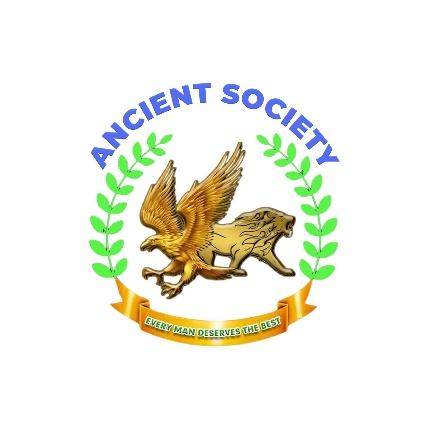
The totems of Ancient Society shall be a Lion and an Eagle representing intelligence, might and dominance. other elements shall be a cowry and Ancient implement representing Currency, engineering and Technology
To be ANCIENT is not to be outdated—it is to be foundational.
ARTICLE VIII – LEGAL FORMS & USE CASES
ANCIENT may legally and structurally exist as:
- A Pan-African foundation
- A technology consortium
- A hybrid or decentralized autonomous organization (DAO)
- An innovation and investment network
- The ideological and governance umbrella for Ancient Coin and related ecosystems
ARTICLE IX – AMENDMENTS
This Constitution may be amended through:
- Regional council consensus
- Technocratic committee review
- Community or DAO ratification where applicable
All amendments must uphold the ANCIENT Ethos and Pan-African sovereignty.
ARTICLE X – CLOSING DECLARATION (MANIFESTO)
We are ANCIENT.
We remember before we invent.
We own what we build.
We innovate with consciousness.
We empower generations.
We design native technologies for a sovereign Africa.
The future is African—and it is ANCIENT.
BYE-LAWS OF THE ANCIENT SOCIETY
(Operational Laws Supplementing the Constitution)
PREAMBLE
These Bye-Laws are enacted pursuant to and in harmony with the Constitution of the Ancient Society . Their purpose is to provide practical rules, procedures, and enforcement mechanisms for governance, economics, assets, membership, and conduct within the Ancient Society.
Where the Constitution establishes principles, these Bye-Laws establish execution .
CHAPTER I — LEGAL STATUS & JURISDICTION
By-Law 1.1 — Private Contract Association
- The Ancient Society operates as a Private Contract Association (PCA) .
- Membership constitutes voluntary contractual consent to all constitutional provisions and bye-laws.
- No external authority has jurisdiction over internal Society matters except where members voluntarily engage external systems.
By-Law 1.2 — Supremacy of Internal Law
- These Bye-Laws are binding on all members.
- In the event of conflict:
- Constitution prevails over Bye-Laws.
- Bye-Laws prevail over policies, manuals, or operational directives.
CHAPTER II — MEMBERSHIP OPERATIONS
By-Law 2.1 — Admission
- Membership is granted upon:
- Registration on the Ancient platform,
- Acceptance of the Constitution and Bye-Laws,
- Verification as defined by governance protocols.
- No discrimination shall exist based on race, nationality, belief, or status.
By-Law 2.2 — Membership Categories
- General Members – Users and contributors.
- Financiers – Contributors of cumulative capital.
- Investors – Significant capital contributors with governance influence.
- Founders & Custodians – Originators and trustees of vision and assets.
Each category carries distinct privileges and responsibilities , defined by governance policy.
By-Law 2.3 — Suspension & Exit
- Membership may be suspended for:
- Fraud,
- Asset misuse,
- Deliberate harm to the Society.
- Members may exit voluntarily, but community assets are non-withdrawable .
- Exit does not absolve prior obligations.
CHAPTER III — GOVERNANCE MECHANICS
By-Law 3.1 — General Assembly
- The General Assembly is the supreme decision-making body .
- Decisions include:
- Asset allocation,
- Constitutional amendments,
- Strategic direction.
- Voting shall be digital, transparent, and auditable.
By-Law 3.2 — Executive Council
- Executes Assembly decisions.
- Oversees:
- Platforms,
- Treasury,
- Partnerships,
- Operations.
- Subject to recall by member vote.
By-Law 3.3 — Legislative Council
- Drafts laws, amendments, and regulatory instruments.
- Reviews compliance with Constitution.
- Cannot override Assembly authority.
By-Law 3.4 — Committees & Boards
Specialized boards include:
- Technology & Media Board
- Economic & Treasury Board
- Production & Manufacturing Board
- Ethics & Dispute Board
Each board operates under charters approved by the Assembly .
CHAPTER IV — ECONOMIC SYSTEM & CURRENCY
By-Law 4.1 — Ancient Coin Status
- Ancient Coin (Anciento) is a private community medium of exchange .
- It is not a security , not public money , and not debt-based .
- Value is socially anchored via gold-grain contribution logic .
By-Law 4.2 — Minting Rules
- Coins may only be minted by:
- Governance approval,
- Community growth needs,
- Asset backing rationale.
- Minted coins are community assets , not profit.
By-Law 4.3 — Prohibited Uses
Ancient Coin shall NOT be:
- Speculated externally,
- Pegged to state currencies,
- Used for illicit activities.
Violation leads to forfeiture.
CHAPTER V — ASSET DEMARCATION & PROTECTION
By-Law 5.1 — Asset Classes
Assets are legally separated into:
- Community Assets
- Currency,
- Platforms,
- Intellectual property,
- Governance tools.
- Commercial Assets
- Apps,
- Media platforms,
- Marketplaces,
- Services.
By-Law 5.2 — Profit Allocation Enforcement
All net profits shall be distributed strictly as:
- 40% Community
- 40% Investors
- 20% Financiers
Any deviation constitutes economic violation .
By-Law 5.3 — Non-Alienation Clause
- Community assets cannot be sold, pledged, or privatized .
- They exist in perpetual trust for members.
CHAPTER VI — TRANSPARENCY & AUDIT
By-Law 6.1 — Public Ledgers
- All treasury movements must be recorded.
- Members have the right to inspect summarized records.
By-Law 6.2 — Independent Audit
- Annual audits shall be conducted.
- Findings are published internally.
CHAPTER VII — ETHICS & CONDUCT
By-Law 7.1 — Ethical Standards
Members must:
- Act in good faith,
- Avoid conflicts of interest,
- Protect communal trust.
By-Law 7.2 — Abuse of Power
Any officer abusing authority shall face:
- Immediate suspension,
- Investigation,
- Potential permanent removal.
CHAPTER VIII — DISPUTE RESOLUTION
By-Law 8.1 — Internal Resolution
- Disputes are resolved internally via:
- Mediation,
- Arbitration,
- Ethics Board ruling.
- External courts are discouraged unless unavoidable.
By-Law 8.2 — Restorative Justice
Priority is given to:
- Repair,
- Education,
- Reintegration,
not punishment.
CHAPTER IX — SECURITY & DATA
By-Law 9.1 — Data Sovereignty
- Member data belongs to members.
- Platforms act as custodians only.
By-Law 9.2 — Cybersecurity
Any breach is treated as a serious offense with sanctions.
CHAPTER X — AMENDMENTS & ENFORCEMENT
By-Law 10.1 — Amendment Procedure
- Proposed by members or councils.
- Reviewed legislatively.
Ratified by Assembly vote.
By-Law 10.2 — Enforcement
- Ignorance of Bye-Laws is not a defense.
- Enforcement mechanisms include:
- Warnings,
- Suspension,
- Asset forfeiture,
- Permanent exclusion.
FINAL PROVISION
These Bye-Laws enter into force upon ratification by the General Assembly and remain binding on all members of the Ancient Society.

